Bruh, can’t wait to smash the pow with some super gnarly runs. -said by some ski bum, somewhere
Tahoe, in a very, very different way than Sabrina saw Paris, is always a good idea, despite the niche language barrier that settles in with snow season. The lake and surrounding scenery are beautiful in any season, whether the renowned blue water is paired with summer’s green forests, the warm palette of fall, or snowy layers from winter through spring. This time of year, if climatic conditions are willing and the snow gods are benevolent, the mountains are in great shape and weather forecasts often expect sunshine. This week, a “March miracle” leveled up the lakeside experience, dumping about 5 feet of snow at Tahoe-area resorts. After a previously dry season, this storm is a welcome game-changer for this year’s spring skiing.
Whether you want to “shred the gnar” (that’s filed under Phrases I’ve Learned in California) or relax in a winter wonderland, here’s what you need to know for a winter trip to Lake Tahoe.
A Quick Word on Quadrants
Wait- don’t leave. I promise this dose of geometry is straightforward and fleeting. When starting to plan your Tahoe adventure, you need to make two selections: North or South Lake, and California or Nevada?
These two choices will set the tone for your Tahoe adventure. While oversimplified, the general understanding is that California is expensive, Nevada has gambling, North Lake is rustic, and South Lake brings the party.
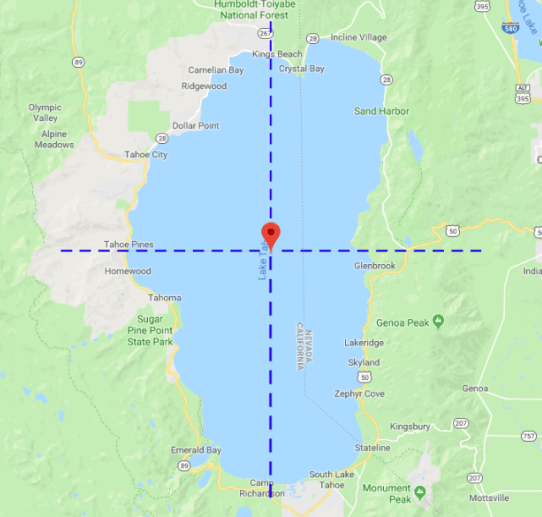
North Lake- California
Key Cities: Tahoe City, Truckee
Key Resorts: Boreal, Northstar, Squaw Valley Alpine Meadows, Sugar Bowl
North Lake – Nevada
Key Cities: Incline Village, Reno
Key Resorts: Diamond Peak, Mt. Rose
South Lake – California
Key City: South Lake Tahoe
Key Resorts: Heavenly, Homewood, Kirkwood, Sierra at Tahoe
South Lake – Nevada
Key Census-Designated Place (seriously): Stateline (seriously)
Key Resorts: Casinos. Step over the state line and you run right into Harrah’s and Hard Rock, etc. Also, while Heavenly’s main address is in California, the resort straddles California and Nevada.
The Resort Range
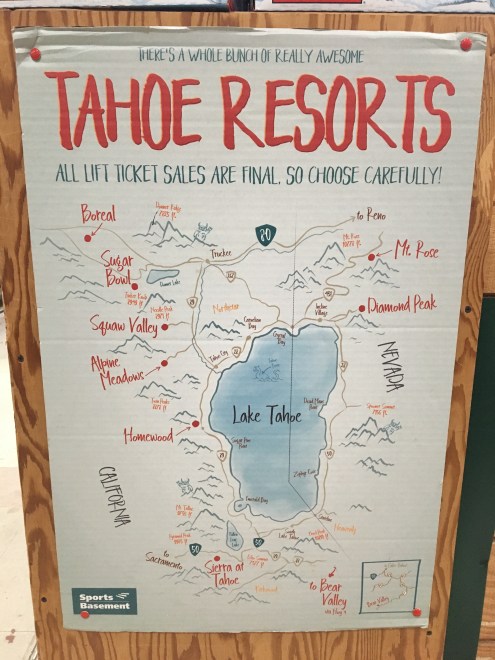
Just as important as the personalities of the quadrants and the mountains found within them are the resorts that dot the area. When researching your trip, you may want to consider ski or board levels, resort terrain, amount of runs, base and peak elevation, snowfall, estimated operating level, villages and lodges, après-ski scene, etc. Examples include Mt. Rose, which is known as the local mountain in the Reno-Tahoe area, has a base elevation of 8,260 ft which makes it Tahoe’s highest base resort, and has a single main lodge on the front side of the mountain with one low-key bar, Timbers. Heavenly spans multiple lodges and base areas and boasts some serious après happy hours. Squaw Valley notably hosted the 1960 Winter Olympics, and has developed an impressive complex of retail, dining, residences, and of course, winter sports. All the main resorts are listed above and mapped out on the handy poster from the Bay Area sports retailer, SportsBasement.
Tips (Next) Up
Whether you are planning to go downhill skiing, snowboarding, cross-country skiing, snowshoeing, tubing, or lounging in fabulous winter gear, here’s a list of tips to keep in mind:
- Once you know where you’re going, when, and how long, check if any multi-mountain passes or packages make more financial sense than purchasing lift tickets at the ticket window. Mid-week and Sunday prices are typically a steal compared to prime Saturday costs.
- Also, research your rentals. Check local off-mountain shops against rentals offered on the mountain. Depending on how many days you intend to enjoy your preferred winter sport, you may consider a season rental instead of daily or other shorter rental periods.
- Be aware of any applicable specials. If available, visit ski expos or other pre-season events in your area in the fall, as they often offer discounts or even free passes. The Warren Miller film tour and Snowbomb are personal favorites. Resorts also offer specials for beginners, “Ski the Day You Fly” discounts, and other promotions.
- Know the rules of the road for your Tahoe transportation. If you’re flying in to the closest airport, Reno-Tahoe International Airport, and have a shuttle to a ski-in, ski-out resort, you’re set. If you’re driving up or renting a car, make sure you and your tires (and possibly chains) are ready for the conditions. Keep an eye out for traffic at the mountain passes or less-groomed roads with help from apps like Waze.
- Speaking of apps, there are several standalone snowsport tracking apps. See your peak speed, the amount and length of your runs, and map your day. Many resorts have their own apps as well, which you can use to track the members of your group on the mountain when you want to meet up for a run, lunch, or for the après as well as to see the different lifts and runs you conquered that day. Pro tip: include a small portable charger and cord with the items in your pocket in case your battery doesn’t hold up to your day.
- While your trip might be all about the elevation, don’t miss out on drinking in the views at a lakeside location. Drink in both the lake view and an expensive-but-worth-it cocktail at the Lone Eagle Grille at the Hyatt Regency Lake Tahoe in Incline Village.
Subscribe via the blue box below or follow @anchoredadrift on Instagram to stay in the loop for our next feature.
 anchored & adrift