anchored & adrift’s Insider Interview series connects our readers with the firsthand stories and perspectives of travel and design industry professionals and other featured guests.
While a travel blog focuses on storytelling, hospitality professionals are story creators. They work to make our adventures into incredible experiences that we crave and yearn to escape through again and again. Traveling is the dream, and these hard-working hosts make it a reality.
Meet Megan C. She’s a manager at one of San Francisco’s flagship hotels and busiest venues for weddings, corporate events, stays by prominent visitors, and anything else her clients and events teams can dream up.
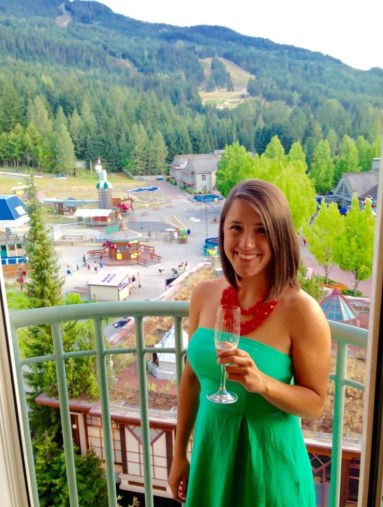
I recently met up with Megan to get the inside scoop on working in the hotel sector of the hospitality industry.
Hooked on Hospitality
Speaking on the hotel’s rooftop with classic views over the City by the Bay, my natural first question was to ask how she ended up here and responsible for this property. On the scale of whim to calling, Megan was hooked on hospitality since college. “I actually majored in hospitality,” she told me, noting how the seemingly-endless and varied opportunities and interactions (events, clients, special experiences, etc.) within hospitality originally drew her interest. “My school had a great internship program so I graduated already with practical experience, which is what you really need.”
Once she was one hospitality degree and several internships in, she knew it would be her career. “I just love the people aspect, and how it’s different every day,” she said.
How the Stay Gets Made
Megan and her colleagues focus on “turning moments into memories,” a concept that whether you as a traveler are conscious of it or not, echoes throughout the industry (Princess’ “Consummate Host” initiative is another example that comes to mind). Translating that concept from the abstract to daily practice in a sprawling, luxury hotel can only be described as an art form.
In her day-to-day work, Megan coordinates across virtually every department within the hotel – housekeeping, front of house, restaurants and bars, catering and conference services, revenue management, etc. – to serve her clients’ needs, even the ones they are not aware of. She emphasized that “communication is critical, and we proactively to work through all potential details to avoid challenges and provide the best service we can.” As Megan walked me through her responsibilities, I realized her management role was much more than catering and conference services – for each company or other type of client, she’s essentially an experience consultant, advising just as much on her event purview as being an insider on the full scope of Northern California tourism. Whether wine tasting or dining at the hippest new restaurant, Megan and her team are a wealth of knowledge for whatever her clients want to cook up in conjunction with their experience at the hotel. Being this type of comprehensive resource for clients involves long and hard hours, but it is not without its perks.


What We Really Want to Know
So, what are Megan’s favorite aspects of working in hospitality? Again, the people aspect took top marks. In this case, her colleagues form a group that works hard together and then enjoys a good time together off the clock. She also has an inside scoop on the happenings and trending destinations within the Bay Area, which I’m sure her friends are very thankful for. As an employee of a global hotel brand, she receives discounts on rooms, food, and beverages at properties around the world (another thing I’m sure her friends are very grateful for) to experience them as a guest. She estimates she’s visited 13-14 sister properties so far with more in the works. When asked about her travel bucket list, Megan said that Italy, Spain, and Peru were top of mind. I’m seeing a five-star Mediterranean getaway in her future – take us with you!
On a workplace-specific note, we also discussed how beautiful the hotel was, its historic nature, and the exposure to high-level clientele that a destination hotel in a global city attracts. As a true professional, Megan didn’t name-drop her privacy-appreciating clients’ names, so I am going to insert an author’s note- a few months ago I met a famous singer who had been on Dancing with the Stars in this hotel’s lobby. I’m a far bigger fan of DWTS than the singer (and I consequently praised him on his dancing and not his singing when we spoke briefly), but that’s my best personal anecdote about a hotel that regularly hosts celebrities, heads of state, and royalty. Pulling off an experience for that echelon of society is very satisfying, as Megan mentioned.
Talk Tech to Me
This wouldn’t be a true piece on hospitality set in San Francisco without a little bit of tech talk, now would it? Hospitality seems to struggle with tech, either pushing it too far (don’t get me started on my feelings about too techy cruise ships) or falling behind (power outlets: important for device-dependent society). Megan has seen some behind-the-scenes changes that have been helpful (changes in POS software, for example), but noted that it’s important that the front-of-house tech matches the brand. “We’re a traditional brand and our guests are looking for a classic experience.” In-room USB plugs, upgraded wi-fi, and better reading lamps are typical fair game, but flashy digital displays and touchpoints don’t match well with decades-old pillars and ornate gold stylings. A hotel needs to know what it is, and work with it.
A final tech insight from my conversation with Megan was her take on the entry of industry newcomers like Airbnb. As a mere “transient” or individual/family traveler, I had never realized that large hotels with a strong conference focus might not actually revolve around me as their consumer (though good branding and strong core hospitality principles can and should make it seem like they do). In fact, if a property has hundreds of rooms and 50,000+ sq ft of event space, individual bookings almost seem insignificant. In the big picture, hotels like this only partially compete against short-term rentals. Revenue and sales managers instead fill the hotel with group business blocks and major events first, and then this drives pricing for “transients.” Some hotel groups even own short-term rental companies now, which adds very different opportunities into their portfolio.
Tell Us About Your Stay
I want to give Megan a huge thanks for speaking with anchored & adrift and giving our readers the inside scoop on hospitality from a hotel manager point of view. Subscribe or follow @anchoredadrift on Instagram to stay in the loop for our next Insider Interview feature.
We love feedback, whether it’s on a post-stay survey, helpful TripAdvisor review, or the travel blog post you are on right now if you’re reading this. As always, please leave any comments below. Thanks for reading!
 anchored & adrift