Hello all! I’m delighted to be writing to you live from Seoul, South Korea. In this post, you’ll find daily recaps and observations from my Seoul searching (and finding!).
Gone Seoul Searching
When I realized I would be moving to the US West Coast two years ago, I bumped one of my bucket list items to the top of my list – crossing the Pacific and visiting East Asia. Living in Europe and on the US East Coast gave me an incredible opportunity to explore North America, the Caribbean, Central America, and the varied regions of Europe since I was one month old, and then being based in San Francisco reoriented my travel goals toward the Pacific. Last year, anchored & adrift made it halfway (visiting Hawai’i), and now, I’m typing this in Seoul’s Gangnam district.
Travel: The Luxury of Direct Flights, Incheon Airport, and Transit
One major perk to Pacific travel from SF? Non-stop, long-haul flights. Taking one 12-hour flight from SFO to ICN felt so easy. But it’s not for everyone – SFO is notorious for both inbound and outbound delays, which is not helpful when you’re trying to traverse the globe in a timely fashion.
Incheon Airport, located about 45 minutes by train on an island to the west of Seoul, is pleasant, elegantly designed, and an overall welcoming first touchpoint in South Korea. From plant-covered walls and signs including English to K-pop performances in the arrivals atrium, its planners have put in considerable effort for tourism.
A taxi from ICN to your hotel will run about ₩65,000, or you can take the Express train to Seoul Station (₩8,000) and continue by taxi (~₩10,000) or subway (~₩2,000) to your hotel from there . For ease of currency calculations, just lop off three zeros for the USD or Euro price (₩65,000 = $65 or €65).
Half day: Mt. Namsan, N Seoul Tower, and Namdaemun market
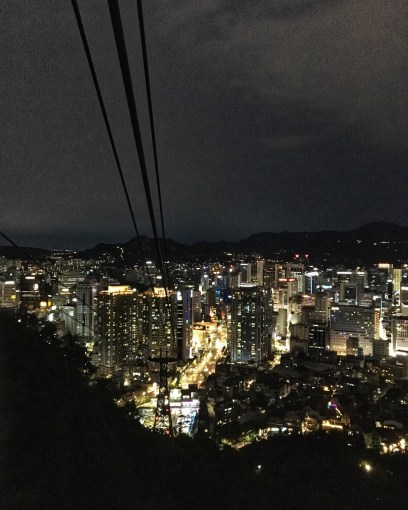
If you have a slightly shorter day after your flight and checking in at your accommodations, shake off the stiffness with an urban hike up Mt. Namsan. There are several mountains within Seoul – you’ll notice the lush greenery and numerous peaks in my pictures – and Namsan is incredibly central. Walk up several flights of stairs (apparently there are 57 floors’ worth) or take the Namsan Cable Car. Most of the walk is in the shade thanks to a dense forest, but Seoul can still be quite warm and muggy. So if you’re looking to sweat out the flight, take the stairs, but if you want a more graceful arrival at the top, take the cable car.
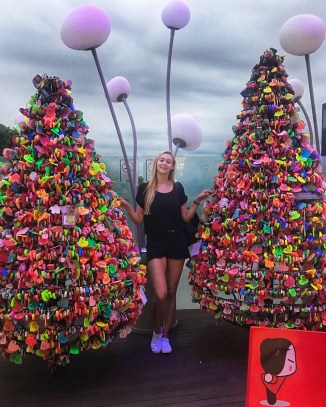
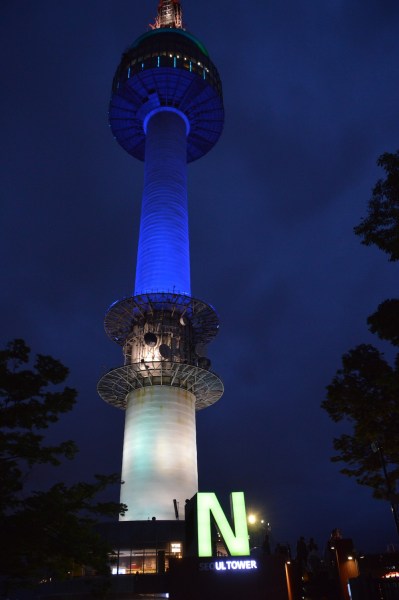
Why hike or ride up Namsan at all? At the top is N Seoul Tower and a massive complex of shopping, dining, and views to go with it. Millions of love locks line the railings, and it’s known as a local date spot if you go as the sun is setting and the city goes from day to magic hour to night.
Worked up an appetite? Once you’re back at the bottom of Namsan, take a brief horizontal elevator ride and walk to Namdaemun market, which is open 23:00-17:00 (the next day). If you go between 5pm and 11pm, it will be a bit empty, and especially so on Sunday night as some merchants take the night off, but hole-in-the-wall spots for Korean staples are all around.
Day 1: Gyeongbokgung Palace, Bukchon Hanok Village, Changdeokgung, Jongmyo shrine, Cheong-gye-cheon
I started my day with taking the (absolutely delightful) subway to the Gyeongbokgung station, which will pop you up immediately to the side of the large Gyeongbokgung Palace complex. If you’d like, you can step into the free National Palace Museum of Korea to warm up your cultural observations first, and then proceed down the steps onto the main palace grounds.
Aside from the palace buildings, the main attraction is the hordes of people, primarily women but also several men, with their hair and makeup done up and dressed in traditional Korean hanbok. These multicolored, poofy, floor-length dresses for the women and shirt-pant combos for the men are beautiful to observe and the photographic process is incredibly entertaining. Some just bring an “Instagram boyfriend” to take phone photos, other bring timer-set DSLRs on tripods, etc.
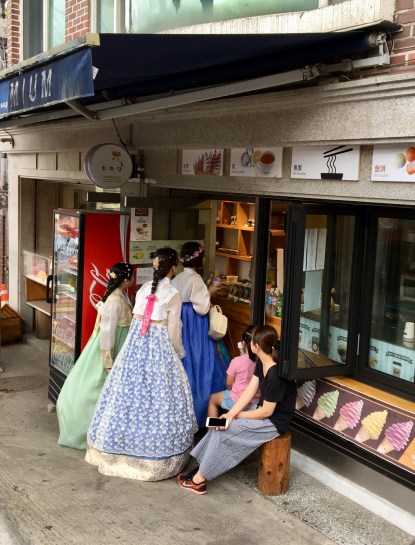
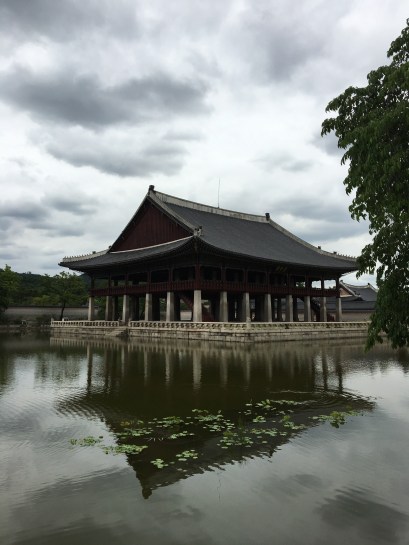
Buy a ticket for ₩3000, walk north to the throne room, take a left/go west to reach the Gyeonghoeru Pavilion. Then look up toward the east and take aim toward the spire of the shrine on top of the National Folk Museum of Korea, cutting through some lesser courtyards that are sure to be hosting some hanbok photoshoots.
Exit the park complex at the intersection of Samcheong-ro and Bukchon-ro 5-gil and start your brief walk to Bukchon.
Bukchon is a charming area with boutiques, elegant souvenir shops, bubble tea, a cat cafe, and more. Head north up Bukchon-ro 5ga-gil to peruse these shops and eventually hit Bukchon-ro 5na-gil, which will take you to the traditional wooden house, or hanok, areas. Lonely Planet’s Seoul guide has a great take on a walking tour through this area going in the opposite direction.
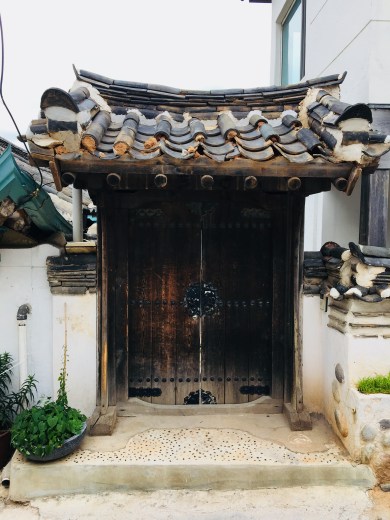
All through Bukchon, there were endless opportunities for food and snacks, and everything looked delicious.
I had a particularly amazing experience at Cha Masineun Tteul, a tea house within one of the wooden hanok buildings. Sit on the floor on a cushion, look at incredible, lush views of Seoul’s mountains, enjoy the simple beauty of your wooden environs, and try some of the most unique and beautifully presented teas you have ever seen.
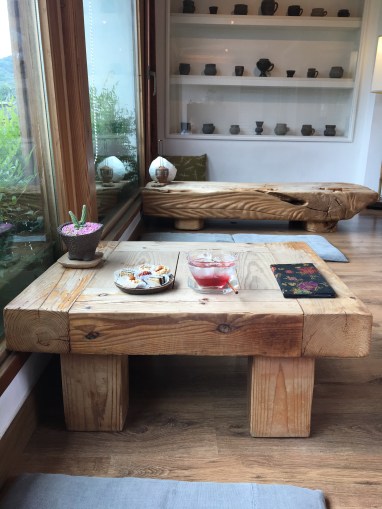
After that, I took the brief walk over to the other main palace, Changdeokgung, where you can join regular tours on the hour or one of three daily tours that take you into the Huwon, or secret garden. After that, you can head south to the Jongmyo shrine and wrap up your day outing by Cheong-gye-cheon, a stream that was long-term covered by concrete until an urban revitalization project that converted the area into a waterfront walkway and park.
After all that walking, it was time for some Korean BBQ at Daedo Sikdang. Seated on the floor, this is your opportunity to shine with any previous training at fully DIY Korean BBQ joints at global Koreatowns (or similar experiences at authentic Shabu Shabu spots). Don’t forget to order some beers and soju.

Day 2: Gangnam, Cheongdam, Dongdaemun, and Gwangjang Market
Since I stayed at the excellent Mercure Ambassador Hotel in Gangnam, it only made sense to start one day in the world-famous south-of-the-river shopping district. Even my dad, who I do not see as an international pop music insider (though maybe I was just extremely misled) knew why Gangnam was famous: “that guy who danced one summer.” Psy and “Gangnam Style” clearly reached all corners of the world’s living rooms.
There is a sign and plaza dedicated to Gangnam Style, and as you might expect, there are frequent group singer/dancer performances in that plaza. Everyone’s trying to be the next big star. Of note- the underground station in Gangnam is known for its overwhelming amount of shops, but I found these to be fairly equal to the stalls in most of the major subway stations I went to.
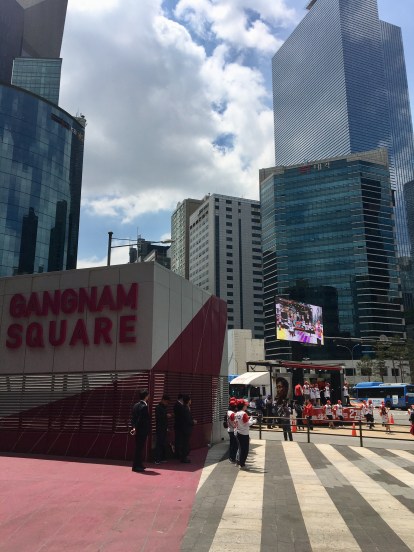
Moving north up Gangnam-daero, it’s time to shop. Being of Nordic, tall descent, my clothing shopping options were limited to accessories (the largest size fit exactly, but there wouldn’t be wiggle room for experimental travel eating!) which was still delightful. But it was game on for K-beauty products for personal use and gifts. I navigated language barriers at The Face Shop by pointing at parts of my face (zits, future wrinkles, etc.) and being taken to what I full expect to be my skin’s salvation. On the fashion retail side, I fell hard for Mixxo and the way they embodied all the chic fashion I saw on the streets in their linen skirt-based outfits.
After working up an appetite shopping and exploring side streets of Gangnam, I was ready for my first KFC in Korea- Korean fried chicken, that is. No, I still have never had Kentucky Fried Chicken and I’m quite fine with that life choice. I went to KyoChon and was very impressed with their fried chicken, something I do not say lightly.
Then, by combination of train and bus, which is very easy to do with the universal and credit card-refillable T-money card, I headed over to Apgujeong Rodeo Street and Cheongdam Fashion Street. Apgujeong is for very high-end shopping, and my main destination there was the Johnnie Walker House. I’d learned about the Johnnie Walker House when it was new in my Global Retail Marketing class in college as an example of an immersive brand experience. It’s billed as an “exclusive embassy” of the Scotch brand as part of their strategic luxury expansion in a whiskey-receptive Asian market.
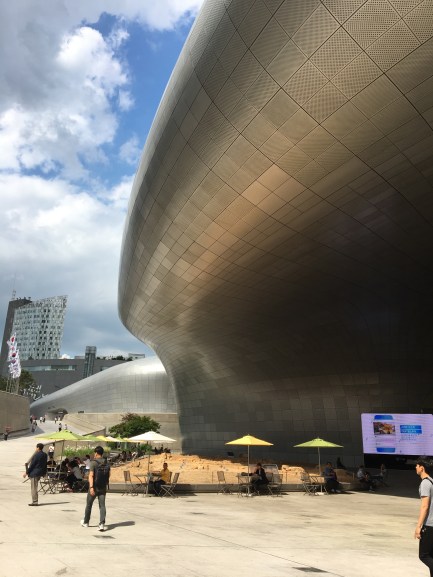
Next up: a subway ride to Dongdaemun. Dongdaemun Design Plaza is an unexpected, celebrated (it graces the cover of Lonely Planet’s Seoul guidebook, for example) landmark in central Seoul. An ultra-modern beanlike structure, it stands in stark but palatable contrast to the Heunginjimun gate and city wall next door. The Design Plaza houses shops ranging from vintage jewelry to the latest in K-pop. Use Dongdaemun Station to pop up directly under the bean, and shop (perhaps via Doota Mall) or stroll your way toward Heunginjimun gate.
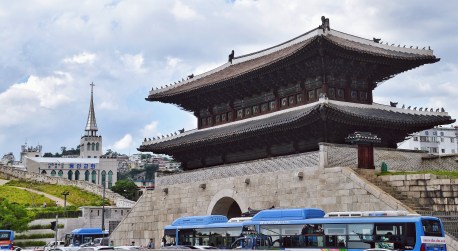
If you’re so inclined, take a break at the JW Marriott Dongdaemun Square directly across from Heunginjimun. Then, follow the Cheonggyecheon urban park/stream west (more above) toward Gwangjang Market.
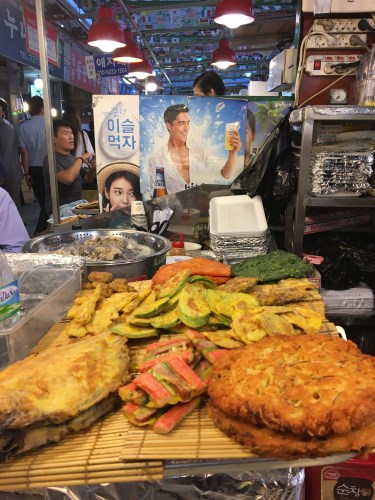
At Gwangjang Market, formerly Dongdaemun Market, compare souvenir goods (one stall may save you ₩1000-2000 over the other!), gifts in cooking and art, and then sample everything edible. Don’t miss mung bean pancakes (basically like fried hash brown pancakes), mayak gimbap (pickled veggies and rice rolled up in seaweed), fried vegetables, kimchi, seafood, tteokbokki (dense rice rolls in sauce), and fish cake.
An Amazing Adventure
From my guidebook, I knew I was going to an incredibly interesting capital city with a depth of historic and modern quirks to explore. What I found was all that, plus a strong, no-fuss sense of self-acceptance as a cosmopolitan identity, a lack of western presence, and a warm, hostess-like concern for visitors to enjoy the country. Whether or not I could understand the Seoulites I encountered, their enthusiasm to engage and authentic hospitality is something I’ll always associate with Korea as a whole.
Subscribe via the blue box below or follow @anchoredadrift on Instagram to stay in the loop for our next feature.
 anchored & adrift
2 thoughts on “Seoul Searching: Field Notes and Live Updates”