Tokyo, much like the sushi conveyor belts found in some of its restaurants, has a never-ending stream of opportunities to explore. With well over 150,000 restaurants (for perspective, Paris has about 25 percent as many), 81,389 shrines, 23 distinct special wards (city districts), millions of neon lights, and not to mention being the most populous city in the world, saying there’s a lot to take in is an understatement.
So, to plan a visit that included a respectable range of the sights, food, quirks, and other uniquely Japanese experiences that make up this mega-city, I went on a research deep dive, polling friends who were past or present Tokyo residents and frequent flyers, scouring the internet, and reading Lonely Planet’s guide cover-to-cover. Add some last-minute cross-outs, scribbles, and double-checking in the dark cabin of my trans-Pacific flight into Asia, and my itinerary was set.
It was an amazing adventure. If you’re planning a trip to Tokyo, here’s what to know and where to go.
First Impressions
Edokko
Tokyoites (which is a very Western term for residents of Tokyo but is, for the purposes of this Euro-written piece, concise) are over it, it being tourism. Unlike their neighbors in Seoul, who were at a minimum authentically welcoming, if not enthusiastically hospitable, Tokyoites are extremely polite but well-worn residents of a global powerhouse steeped in dynasties of tradition and dominance. If you can’t speak Japanese, generally, it’s not their problem. Just like it wasn’t my problem to explain the above subheader, “Edokko” (okay, it means people of Edo, the former name of Tokyo, which is generally preferred over “Tokyokko.”)
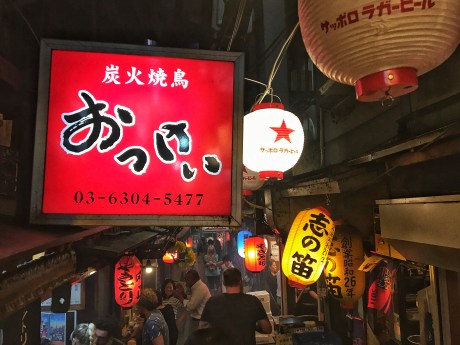
It’s easy to tell – and feel as an outsider- in tourist-infested areas like Golden Gai, where signs indicate where English-only speakers are welcome and where they are not. As is true anywhere, the opportunity to dig into Tokyo with a local or fluent speaker is incredibly helpful and sets the stage for a radically different experience. In particularly Japanese fashion, it commands hard-earned respect and legitimacy. But not to worry- even without a friend in this corner of the world, you will experience authentic Tokyo.
Subway
The subway is the fully-functioning lifeblood of the city. But coming to Tokyo directly from Seoul, I was unimpressed. The cars are small and aging, the system is a mashup of separately managed lines (a day pass will only run on one line, buy the Suica pass to move freely), the system is cash-only, and while I didn’t witness any of the wild pushing that has circulated the internet showcasing over-capacity cars, I can see how it could happen. It’s easy to navigate with that base knowledge, but it simply didn’t make sense in the spectrum of orderly Japanese things. Metro riders didn’t queue in perfect lines like Seoulites did either (you can tell Seoul’s metro won my heart and logical appreciation). The airport transit (Narita Express/Skytrain) was good despite not being able to pay with card when outbound from the airport. Which brings me to another observation.
Cash
Have it, and have enough of it to use as your primary form of payment throughout your time in Tokyo. Credit card use is definitely in the minority, and change (which can be awkward when you never use change in your home country and aren’t familiar with the sizes of the Japanese coins) is king. I don’t mind counting coins at all -actually, it reminds me of my “riches” growing up in Finland- but I’m not as adept as I should be in a fast-moving city.
Overall, for all the tech created and exported by Japan, it seems like the daily hardware and software of the city is lagging.
Mix and Match These Mini-Adventures
Onto the real reason why you’re here (thanks for reading, by the way!). Here are some anchored & adrift tried and true plans to enjoy various parts and elements of Tokyo.
Daytime
The emperor’s new… fish:
Start your day in the world-famous Tsukiji market. Have egg custards, ramen, top grade tuna, and fried octopus for brunch followed by mochi while you navigate the food stalls and browse intimidatingly-sharp knives and seafood ranging from bland to extraordinary. Walk northwest to Ginza, the hub for department stores, luxury boutiques, and the usual global H&M, Zara, etc. crowd. While it doesn’t sound particularly Japanese, Le Café Doutor Ginza has a great view over one of Ginza’s major intersections for a coffee break with people watching. Next, walk through Tokyo Station on your way toward the Imperial Palace. Stop at the Palace Hotel’s Lounge Bar Privé for an expensive but comfortable (and very chic) surroundings and view over the Imperial Gardens. Spend time in the Imperial Gardens and stop in at the disconcertingly Portland-enthusiastic Craft Beer Market in Nihombashi. Don’t worry, there’s a special sake fridge if you’re like me and walk into beer halls demanding wine 🙂
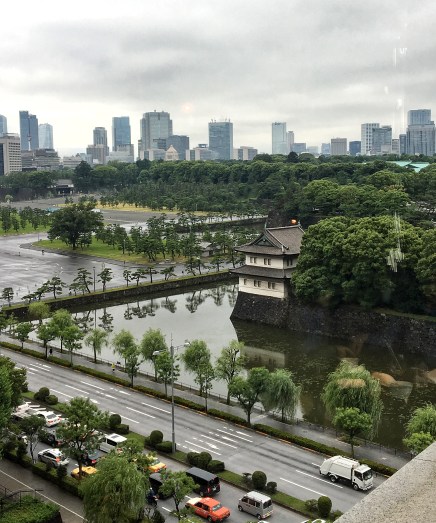
Purchases, parks, and peace:
Start your day taking the metro to Ueno, where you can visit the Tokyo National Museum or get straight to the sprawling, open-air market that is Ameya Yokocho (maybe via a 7Eleven for a rice ball to fuel your adventure). I may have eyed every booth and every backpack in the market. Don’t buy too much, because from there you can head in to one of the larger parks in Tokyo proper, Ueno park (Ueno Kōen). The grounds include multiple shrines, a zoo, an event center, several museums, and, noteworthy when they’re in season, numerous cherry trees. You will not want to miss the peaceful and beautiful Ueno Tōshō-gū and the neighboring Pagoda of Kan’ei-ji. Cut through the park to set your path toward the Nezu-jinja complex, a can’t-miss stop. It’s one of the oldest places of worship in the city, miraculously surviving the world wars and natural disasters. Even the most secular person can feel the reverence in this place and enjoy the beauty of everything from the large intricate shrine structures to the tunnel of wooden arches.
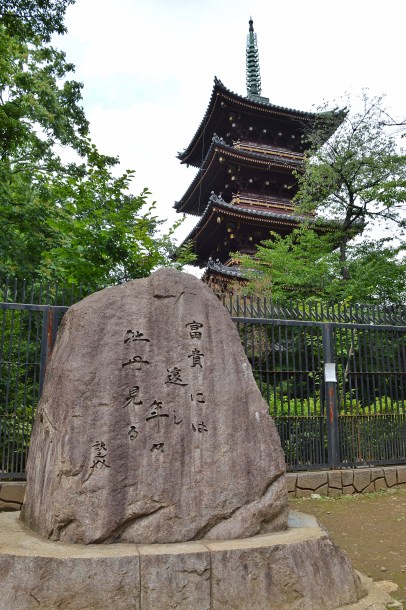
Ancient to electronic:
Take the subway to Asakusa, and be prepared to pop up in the most touristy part of Tokyo listed here. The touristy feel isn’t even from the wares sold at the booths leading to Senso-ji. Instead, it stems from the sheer amount of gawking foot traffic. It almost felt busier than Shibuya crossing, since in Shibuya, eventually you do need to cross the street there or get run over. Enter the shrine area and meander down the vendor-lined pedestrian street that leads to the innermost temple buildings. Compare price points and get any Japanese souvenir you could imagine here, and while you’re at it, make sure to stop at Asakusa Kibidango Azuma for incredible matcha ice cream, matcha iced tea (when in Rome, as they say), and the small, sweet doughy kibidango balls that come in a pink, bunny-logoed envelope. As you approach the temple, stop at one of the fortune kiosks to either side. Following the honor system, you put a coin in to shake a container for your fortune on a wooden stick, match the symbol on that wooden stick with a fortune drawer, take a sheet of paper with your fortune on it from the matching drawer, and return the stick for the next user. You may get very good luck, but if you get bad luck, you counter it by tying your fortune to a designated area (recipients of good luck keep their fortunes).
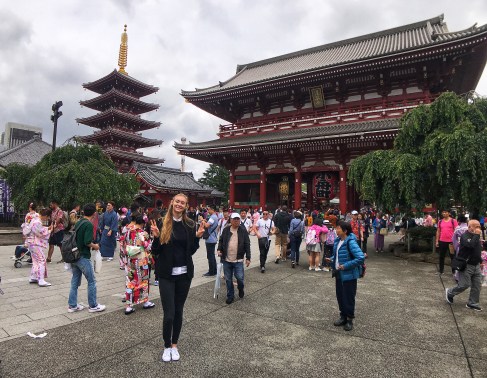
From there, get back on the subway toward Akihabara, the electronics heart of Tokyo. Stop in at Bic Camera, a multi-floor mega store, for everything under the sun from camera supplies to sake to luggage to dancing, solar-powered Pikachus. Two other can’t miss spots: any of the numerous modern video game arcades (be prepared to see men with face towels and gym bags for the exercise they get from enthusiastically playing the games) in the area and Super Potato, a haven for games gone by.
Evening
Late afternoon wonders to an all-night affair:
Start at Omotesando station and head northwest up the pleasant tree-lined boulevard toward Harajuku. On your way, stop in to Heiroku sushi (of above-noted conveyor belt fame) to load up on delicious nigiri before your big night. Continuing on your straight path, you’ll pass (and maybe spend some time in) the Omotesando Hills shopping complex, numerous designer boutiques, and the mirrored prism entrance of the new Tokyu Plaza Omotesando Harajuku. Turn right here to head up to Takeshita Street, one of the main thoroughfares for Harajuku’s fashion and other eccentricities.
From Harajuku, head south down Meiji-Dori to Shibuya. Your list of destinations needs to include Shibuya Crossing, Tokyu Hands, and Mega Don Quixote, the last two being impressive, multi-floor megastores housing everything under the sun. Then hop onto the subway to head up to Shinjuku for your nightlife adventure.
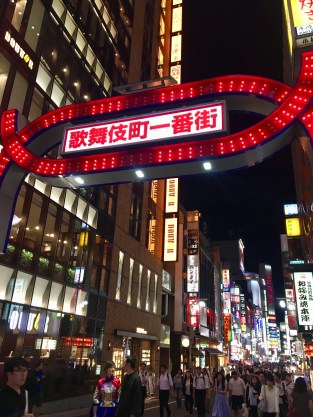
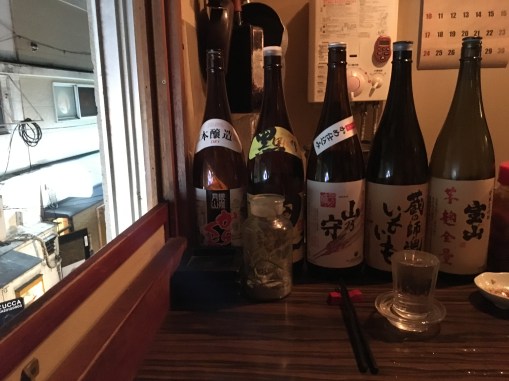
Upon arriving in Shinjuku, navigate to the signature red arch of Kabukicho at the entrance of Ichibangai to start your night. You may want to pop in to the 7Eleven right there for a can of Kirin’s fruit-flavored chuhi (shochu-based high ball), which you are allowed to drink on the street in Japan, though it is considered low-class (eating and walking is also considered low class, which I whole-heartedly agree with). Leave the rice balls for now, since you will have plenty of food to sample throughout the night. As you head down the street, pop into side alleys for gyoza bars, etc. If you keep heading down the main street, look up to see Godzilla peering over the district. Adjoining the Kabukicho area you’ll find the alleys of Golden Gai, an area with intimate 8-12 person bars of varying degrees of receptiveness toward tourists. These bars just as much an after-work mainstay of regular, hardworking Tokyoites as they are an attraction for curious tourists. Browse the rows of bars (don’t forget to look up at the top floor bars!) to check whether they have a cover charge, what the cover charge involves, if there are any specialties you’d like to try, and what the bar’s scene is. Sample drinks like sake, highballs (schochu, soda water, and a mixer – matcha or oolong are highly recommended), awamori (Okinawa’s local spirit, and not for the faint of drinking heart), and a mixed bag of dishes often made right in front of you behind the bar. Bar hop to try a range of settings throughout your night.
From croquettes to the clubs
For another night out, head to Roppongi. Start with dinner at Jomon Roppongi, which is a top-notch izakaya easily accessed via the metro. Don’t miss the day’s specialty skewers, and absolutely don’t leave without having at least one, if not two, of the potato croquettes. Hot, crisp on the outside, comforting on the inside, and with a perfectly medium-boiled egg at its core, it is happiness in food form. Roppongi has an infamous reputation involving its nightlife. Head out into the see-and-be-seen club and luxury lounge scene, or head to something more relaxed like Brewdog Roppongi, a Scottish outpost serving Japanese and British beers and ciders. There’s also a SuperNintendo video game machine by the entrance, because, Japan.
From elite to the street
For another take on Shinjuku nightlife, start at a standing sushi restaurant, Uogashi Nihon-Ichi, where locals come in for dinner after work, eye the adventurous tourists who ended up in their establishment, and shrug. Call out the rolls, nigiri, and sashimi you want in your best attempt at Japanese to the chef in front of you, and they’ll appear in short order on your banana leaf plate. Don’t forget some beer and sake to wash it down! Next, stop in at 7Eleven (perhaps you’ve noticed a trend by now) to purchase a beverage for your 15 min walk to the Park Hyatt Tokyo (you’ll also appreciate the price point of 7Eleven vs. one of the most elite hotels in the world). Navigate up and across the hotel to the New York Bar, located on the 52nd floor of the hotel and looming over the city. Get an expensive cocktail, enjoy the live music, and drink in the aerial views over the rest of Tokyo from the floor-to-ceiling windows. Head back to central Shinjuku for a drink that’s less impactful on your wallet, as well as some late night noodles or dumplings.
Arigatou!
There’s so much to say about Tokyo, but that’s enough for this post. In our next post we’ll do a quick list of everything you need to eat when you’re in the dining capital of the world.
Subscribe via the blue box below or follow @anchoredadrift on Instagram to see more photos from Tokyo and stay in the loop for our next feature.
 anchored & adrift